Yard Drainage Solutions in Oklahoma: French Drain vs Swale vs Dry Well vs Regrading
The best yard drainage solution is the cheapest fix that matches where your water comes from. On Oklahoma clay, that is usually regrading the yard first, then a swale. A French drain comes next, for ground that stays soggy. Dry wells, catch basins and channel drains handle the special cases.
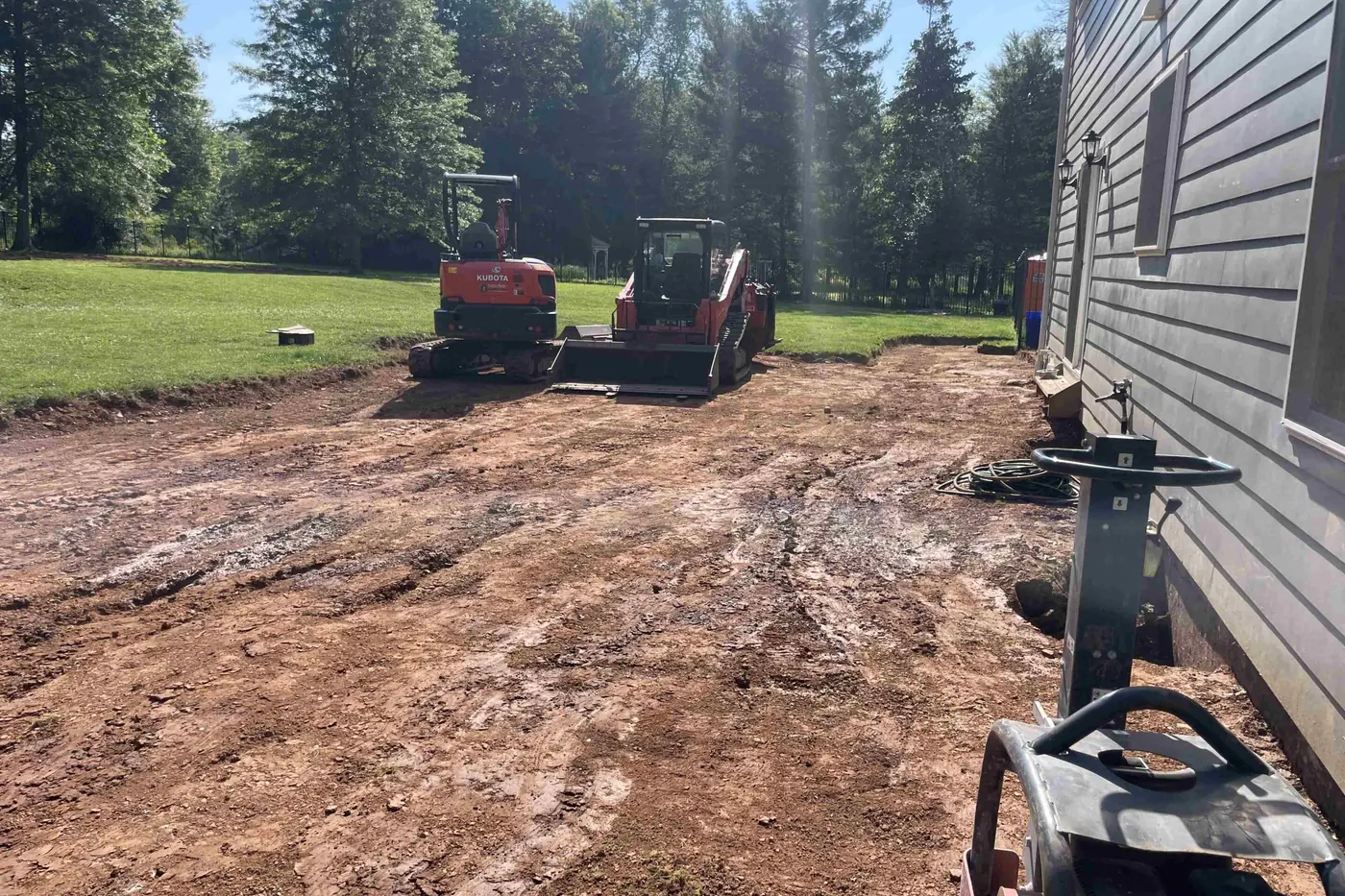
We regrade yards, cut swales, dig French drains and set driveway culverts around Duncan. A Bobcat E35 mini excavator digs the trenches, and track loaders shape the grade. That is the work behind our yard drainage and French drain service. This guide compares six fixes and their published costs.
Which yard drainage solution fits which water problem?
Match the fix to where the water comes from. Water running toward the house wants regrading, and water crossing the lawn wants a swale. Soggy ground wants a French drain. Water that pools at one spot wants a catch basin, and water sheeting off concrete wants a channel drain.
OSU Extension notes that drainage practices vary in cost, effectiveness and required maintenance. The table puts six of them side by side with HomeGuide’s published cost.
| Fix | What it solves | Published cost | Source |
|---|---|---|---|
| Regrading the yard | Water running toward the house | $500 to $1,000 for one side of the foundation, $1,000 to $3,000 around the entire house | HomeGuide regrading guide |
| Drainage swale | Surface water crossing the yard | $5 to $15 per linear foot, or $0.50 to $1.00 per square foot | HomeGuide drainage guide |
| French drain | Soggy ground that stays wet | $10 to $35 per linear foot, exterior | HomeGuide drainage guide |
| Catch basin | Water pooling at one low spot | $8 to $15 per square foot for catch basins tied to underground storm pipe | HomeGuide drainage guide |
| Channel drain (trench drain) | Water sheeting across a concrete driveway or patio | $30 to $150 per linear foot | HomeGuide drainage guide |
| Dry well | An outlet for a drain with no lower ground | $1,200 to $5,200 installed, on average | HomeGuide dry well guide |
These are national ranges. Run length and the distance to an outlet move a real yard’s price up or down.
How does Oklahoma clay change which fix works?
Clay sheds water instead of soaking it up, so fixes that move water across the surface work best here. OSU Extension says many soils in Oklahoma have little sand content. OSU adds that heavier clay ground typically does not soak up water very fast. Fixes that need water to soak in work slowest.
NRCS soil descriptions put Renfrow, an Oklahoma red prairie clay soil, at 35 to 55 percent clay. Kirkland, a central Oklahoma claypan soil, runs 35 to 60 percent clay, and water moves through both slowly. So a regrade or a swale works the moment it rains. A dry well empties only as fast as the clay drinks.
When should you regrade a yard for drainage?
Regrade first when water runs toward the house or pools against the foundation. Oklahoma’s residential code sets the target. The grade must fall at least 6 inches within the first 10 feet from the foundation walls. OSU Extension says it plainly: soils should slope outward from a house.
To check yours, hold a string at ground level against the wall and pull it 10 feet out. Level the string, then measure from it down to the dirt. Less than 6 inches means the grade falls short.
Where lot lines, walls or slopes block that fall, the code calls for drains or swales instead. Yard grading for drainage is part of our dirt work and grading. We cut the high side with the track loader and move that dirt to the low side. A regrade too big for a track loader is past our equipment, and we will say so at the quote.
French drain vs swale: which one should you pick?
Pick a swale for water moving across the surface and a French drain for water sitting in the ground. A swale is a shallow, shaped channel that carries runoff on top of the soil. A French drain is a gravel trench, usually with perforated pipe, that collects water from the soil around it.
Our French drains use perforated pipe in washed gravel, wrapped in filter fabric. We dig them with the mini excavator, the same machine behind our trenching service.
On clay, a swale often wins, because the water never has to soak in. It also costs less per foot in HomeGuide’s numbers. Our French drain cost guide for Oklahoma breaks the drain’s price down by depth and length.
A swale needs upkeep. OSU Extension says swales require annual or periodic maintenance. A French drain wins where a swale will not fit, like a narrow side yard.
French drain vs dry well: what is the difference?
A French drain collects water, and a dry well gives that water somewhere to go. OSU Extension defines a dry well as a soil cavity which remains dry under light rainfall conditions. It sits at the end of a drain line. It takes in a storm’s water and lets it seep into the soil.
Oklahoma’s plumbing code names where a buried subsoil drain may empty. Section 1111.1 lists a trapped area drain, a sump, a dry well or an approved location above ground. Where the lot falls away, we run the drain out to daylight at that lower spot.
Clay is the catch with a dry well. HomeGuide’s dry well guide says clay-heavy or less permeable soils might require additional wells or larger units. It adds that many professionals recommend a percolation test, which measures how fast soil takes water, to size one.
When a yard has no lower spot for a drain to empty, we work out the outlet with you at the quote.
French drain vs catch basin vs channel drain: what does each one catch?
Each one catches water in a different place. A French drain takes water from the soil along its whole length. A catch basin takes surface water at one low spot through a grate. A channel drain, also called a trench drain, is a long grated slot that catches water sheeting across concrete.
A catch basin still needs a pipe to carry the water off, and that pipe needs an outlet. A channel drain set in a concrete driveway goes in with the concrete, so a concrete crew pours it.
On a gravel driveway, water crossing the drive often wants a ditch and a culvert instead. That culvert and its ditch are our part. Our guide to what a driveway culvert costs in Oklahoma covers pipe sizes and permits.
How do you fix standing water in a yard?
Standing water in a yard gets fixed in a set order. Find where the water comes from, then check the grade at the house. Find an outlet before anyone digs. The right fix is the cheapest one that moves the water to that outlet.
- Watch a storm. Note where water runs and where it still stands the next day.
- Check the downspouts. Roof water dumped at the foundation feeds the problem, so extend the downspout.
- Check the grade. Less than 6 inches of fall in the first 10 feet points to regrading.
- Find the outlet. A swale or drain needs lower ground on your own lot to empty onto.
- Mark the lines first. OKIE811 asks for a locate request at least 3 business days before you plan to dig.
We check the same things on site before we quote yard drainage work in Duncan. When the answer is a regrade, our guide to grading and dirt work cost in Oklahoma lists more prices.
Common questions about yard drainage solutions
What is the cheapest way to fix yard drainage?
Moving dirt is usually the cheapest fix. HomeGuide puts a swale at $5 to $15 per linear foot and an exterior French drain at $10 to $35. Regrading one side of a house runs $500 to $1,000 in HomeGuide’s numbers. Those fixes work when the problem is the shape of the ground.
Is a swale better than a French drain?
For surface water on clay, a swale is often the better pick. It carries runoff on top of the ground, so the water never has to soak in. A French drain is better where a swale will not fit. It also wins where the ground stays wet below the surface.
Do I need a French drain or a dry well?
A French drain collects water, and a dry well is one place to send it. Some yards need both. A dry well earns its place when the drain cannot daylight at a lower spot on the lot. On tight clay, daylight is the better outlet, since clay takes in water slowly.
What are the alternatives to a French drain?
Regrading and a swale are the two main French drain alternatives. Both move water across the surface instead of through a buried pipe. A catch basin handles water that pools at one spot, and a channel drain handles concrete. OSU Extension also lists ditches, culverts, riprap and terraces as drainage fixes.
Who do you call for drainage problems in your yard?
Call a dirt work or drainage contractor when the fix means moving soil or digging a trench. That covers regrading, swales, French drains and driveway culverts. A channel drain in concrete is a concrete crew’s job. Around Duncan, the digging and grading is what we do.
How much does a dry well cost?
HomeGuide’s dry well guide puts installation at $1,200 to $5,200 on average. HomeGuide’s drainage guide prices most gravel or plastic tank types at $50 to $700 installed, up to $3,000 for concrete. HomeGuide says materials, volume, soil conditions and regional labor set the price.
Get the fix matched to your yard
The right fix depends on how your ground falls and where the water can leave. We come look at the grade and the low spots, then quote the work for free. If water stands in your yard around Duncan and Stephens County, contact us for a quote.