Skid Steer vs Mini Excavator: Which Machine Does Your Oklahoma Job Need?
A skid steer is a compact loader that carries dirt and gravel in a front bucket. A mini excavator digs with an arm on a cab that turns all the way around. Pick the loader to move and shape dirt, and the excavator to dig below the surface. Many jobs need both.
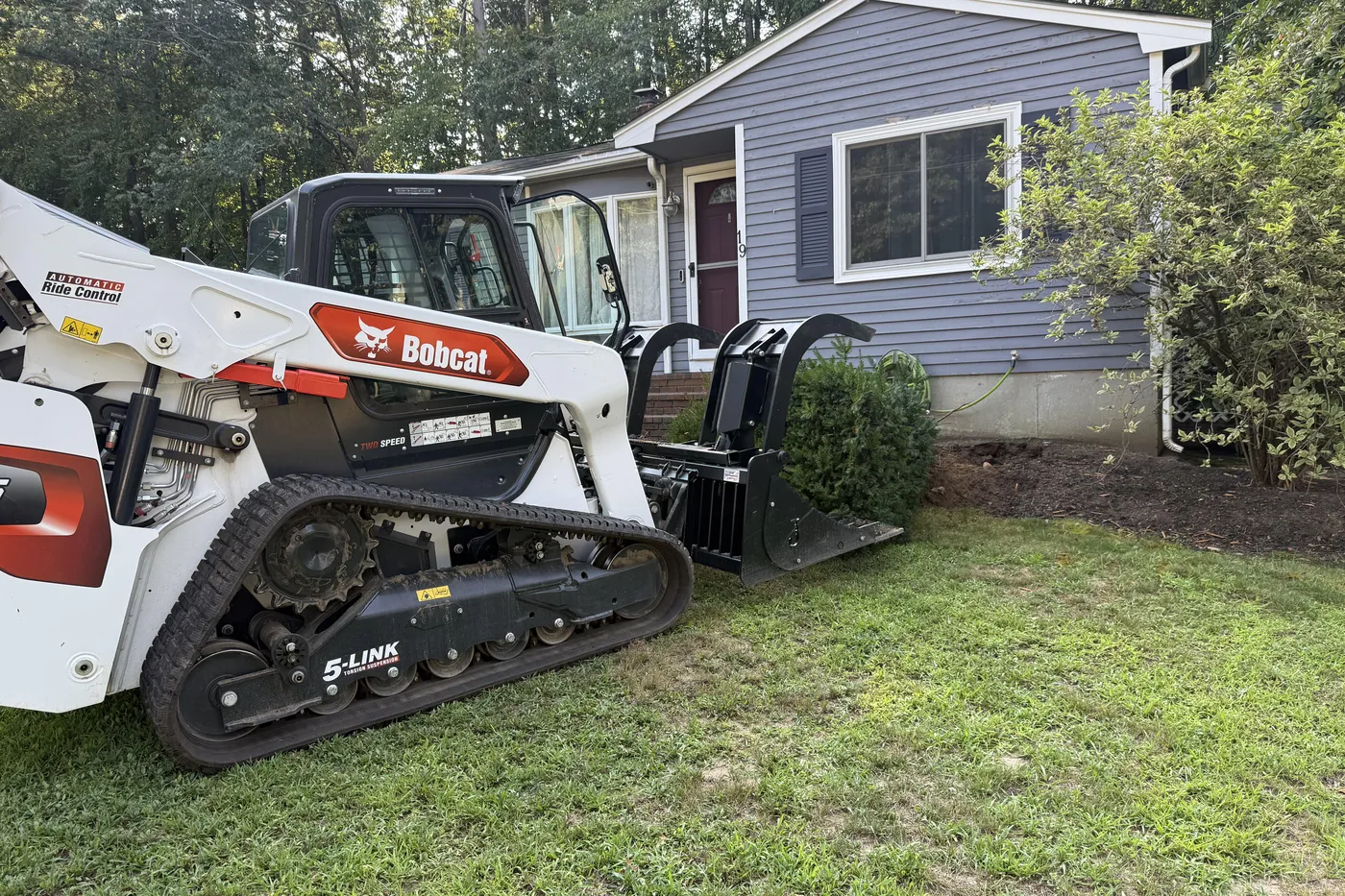
We run both machines around Duncan and Stephens County. The excavator is a Bobcat E35, and the loaders are a Kubota SVL75 and a second track skid steer. Our dirt work and grading uses both, since the excavator digs and the loaders move and shape the dirt.
What is the difference between a skid steer and a mini excavator?
A skid steer works on top of the ground and lifts a bucket on two arms. A mini excavator digs down from one spot with a boom and arm, and its cab turns 360 degrees. The loader moves material across a site. The excavator opens the ground.
A skid steer on tracks is called a compact track loader. It does the same work as a wheeled skid steer, with tracks in place of tires. Our loaders run on tracks, and so does the E35.
Kubota’s spec sheet for the current SVL75-3 lists 8.6 mph in high gear. Bobcat lists 2.9 mph for the E35, so the loader does the carrying.
How do weight, width, lift and dig depth compare?
On the published specs, the loader is heavier and a little narrower on standard track. The excavator digs about 10 feet down. The loader lifts its bucket hinge pin about 10 feet up. The table sets Bobcat’s E35 figures beside Kubota’s spec sheet for the current SVL75-3.
| Spec | Bobcat E35 mini excavator | Kubota SVL75-3 compact track loader | Source |
|---|---|---|---|
| Built for | Precise digging and trenching | Lifting and carrying materials | Bobcat buyer’s guide |
| Operating weight | 7,659 lb | 9,190 lb open cab, 9,420 lb closed cab | Bobcat E35 page, Kubota SVL75-3 brochure |
| Width | 69.7 in | 65.9 in on standard track, 69.1 in on wide track | Bobcat, Kubota |
| Digging below grade | 121.2 in dig depth with the standard arm, about 10 ft | No digging arm | Bobcat |
| Front bucket lift | No front loader bucket | 2,490 lb rated operating capacity, 122.7 in hinge pin height | Kubota |
| Top travel speed | 2.9 mph | 8.6 mph in high gear | Bobcat, Kubota |
| Hired with an operator | $100 to $300 per hour | $100 to $300 per hour | HomeGuide |
We run a Kubota SVL75. The loader column comes from Kubota’s spec sheet for the current SVL75-3, and other models and years differ.
Kubota lists 9,190 lb with an open cab, about 1,500 lb more than Bobcat lists for the E35. On standard track, the SVL75-3 runs about 4 inches narrower. Either one is just under 6 feet wide, so measure the gate.
Which machine fits which job?
Use the loader when dirt or rock has to move across the ground and get leveled. Use the mini excavator when the job goes below the surface, like a trench or a stump. Pads, driveways, culverts and pond cleanouts usually take both, one machine digging and one carrying.
Leveling a rough yard and spreading gravel are loader jobs. So is smoothing torn-up ground back to mowable, the heart of our grading and leveling work.
One of our loaders runs a hydraulic brush cutter for thick brush. Open pasture gets the tractor and brush hog. On land clearing jobs, the excavator digs out roots that would sprout back.
Trenches belong to the mini excavator. We dig water and electric line trenches with the E35. On a long, straight run in open ground a chain trencher can be faster, and how a trencher compares with a mini excavator covers that call. Footings and drainage cuts run through our excavation work.
For stump removal, the E35 digs around the stump and lifts the root ball out whole, so it does not sprout back.
Bigger jobs usually take both machines. On a shop or building pad, the excavator cuts the high side and the loader fills the low side. On a gravel driveway, the excavator digs out soft spots and the loader spreads and crowns the rock. When dirt leaves the site, the loader fills the gooseneck dump trailer.
A pond cleanout splits the same way. The excavator digs silt from the bank, and the loaders carry it out. A culvert takes the excavator for the pipe trench and a loader for the rock. On a fence line, the cutter works the row and the excavator pulls what grew through the wire.
A backhoe loader puts a loader bucket and a digging arm on one machine. We do not run one. How a mini excavator compares to a backhoe covers that choice.
Do tracks matter on Oklahoma red clay?
Yes. Tracks spread a machine’s weight over more ground than tires, so they sink and rut less when clay turns soft. Bobcat’s buyer’s guide says wheeled skid steers fit firm, stable ground and can be limited on soft or muddy terrain. Our loaders and the E35 all run on tracks.
Upland ground around Duncan includes Kirkland and Renfrow claypan. The 1964 USDA soil survey calls that claypan compact, blocky clay that is very slowly permeable. After a rain, water sits on that layer instead of soaking through.
Tracks still mark wet clay, and a loader turning in place scuffs grass. A soaking rain can push a job back for either machine.
What does it cost to hire a skid steer or a mini excavator?
HomeGuide puts operators with their own mini excavator, backhoe or skid steer loader at $100 to $300 per hour. The band is the same for either machine, so the hours set the bill. HomeGuide says most operators charge a minimum of one day or eight hours.
HomeGuide puts renting your own mini excavator at $200 to $700 per day. We quote each job free after we look at the ground on site.
What should you check before either machine shows up?
Start with the locate request. OKIE811 asks diggers to enter a request at least 3 business days before they plan to dig. Then measure the gate and decide where extra dirt will go. Wait for the locate marks before either machine breaks ground.
When is a job too big for a skid steer or a mini excavator?
When it needs a dozer or a full-size excavator. Big regrades, large pond dams, basements and deep mains are past our equipment. We do not run a dozer, a full-size excavator or a dump truck, and we say so at the quote.
Holes deeper than the roughly 10 feet Bobcat lists for the E35 want a bigger machine. Heavy closed-canopy timber is past a brush cutter too. If that is your job, we will point you toward the right kind of outfit.
Common questions about skid steers and mini excavators
Which is better, a skid steer or a mini excavator?
Neither wins every job. A skid steer is better for moving and leveling dirt and gravel. A mini excavator is better for digging below the surface, like trenches and stumps. Bobcat’s buyer’s guide says each machine brings a different strength to the site, and many jobs use both.
Can a skid steer dig like a mini excavator?
Not well. A skid steer’s front bucket cuts and scrapes at ground level, and the machine has no digging arm. Bobcat’s buyer’s guide says a dedicated mini excavator is usually the better choice for regular trenching or post-hole work. Stumps and footings are excavator work too.
Can a mini excavator grade a yard?
It can do the rough part. Bobcat’s buyer’s guide says mini excavators can handle initial grading and slope work with the blade. Spreading dirt across a yard and shaping the final grade is loader work. On Bobcat’s and Kubota’s spec sheets, the loader travels about three times as fast.
How much can a track loader lift?
Kubota’s spec sheet for the current SVL75-3 lists a rated operating capacity of 2,490 pounds. Kubota sets that at 35 percent of tipping load. The same sheet lists a bucket hinge pin height of 122.7 inches, about 10 feet. Check the sheet for the exact loader you hire or rent.
How much does it cost to hire a skid steer or a mini excavator?
Hired with an operator, either machine runs $100 to $300 per hour in HomeGuide’s numbers. HomeGuide says most operators charge a minimum of one day or eight hours. HomeGuide puts renting your own mini excavator at $200 to $700 per day. We quote free after looking at the ground on site.
Can a skid steer replace a dozer?
On small jobs, yes. A track loader pushes dirt and levels ground on yards and building pads. Big regrades and large pond dams want a dozer. We do not run a dozer, and when a job needs one, we say so at the quote.
Not sure if your job is loader work or excavator work?
Tell us what the ground needs to look like when we leave. We quote free on site after we look at it. If the job wants a bigger machine than ours, we will say so. To set up a look around Duncan or Comanche, ask for a free on-site quote.