Trencher vs Mini Excavator: Which Should Dig Your Oklahoma Trench?
A trencher cuts a narrow trench with a moving chain of teeth as it rolls along. A mini excavator digs with a bucket on an arm, one scoop at a time. Pick a trencher for long, narrow runs in open ground. Pick a mini excavator for roots, buried rock, sharp bends and deeper trenches.
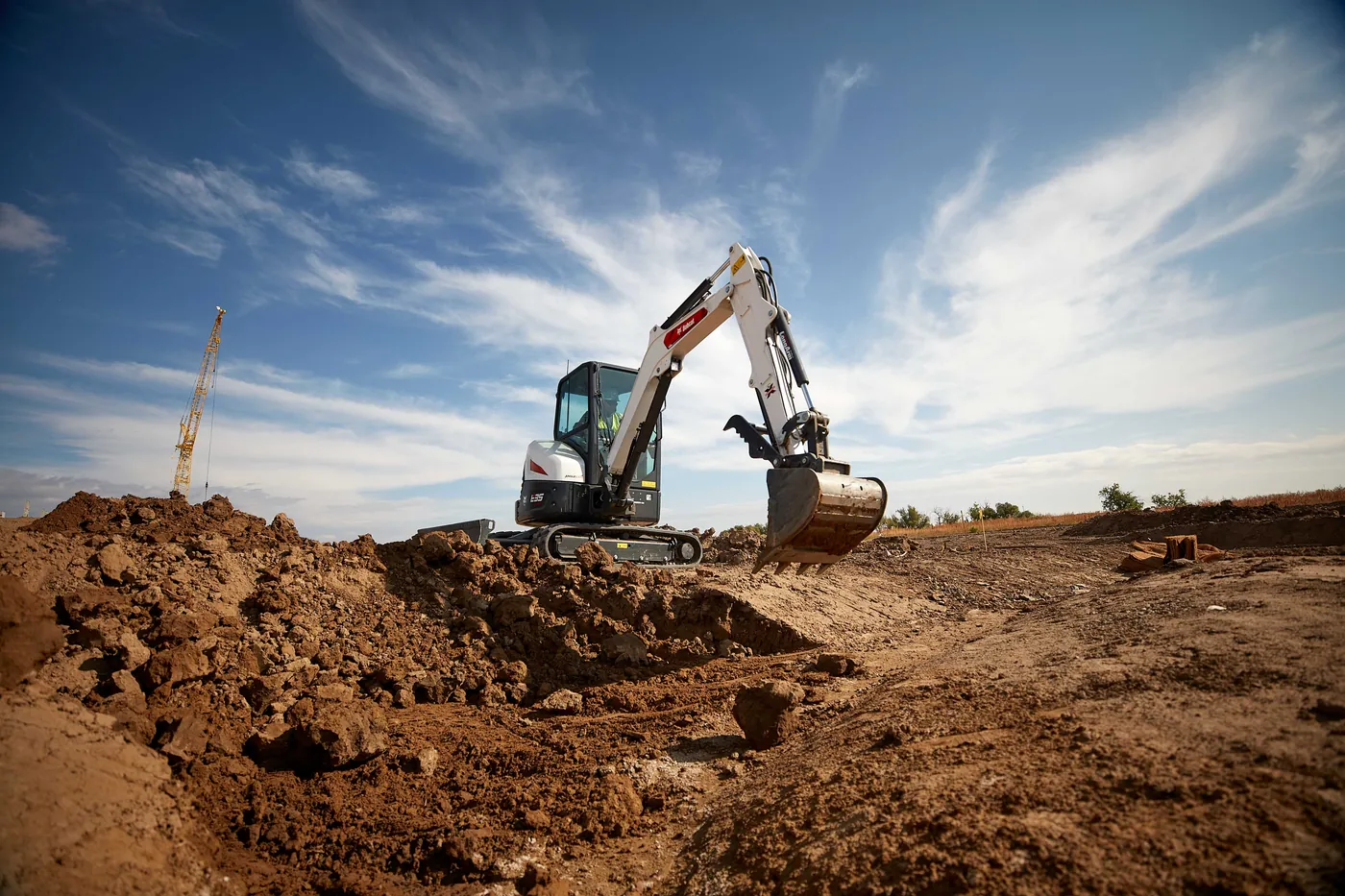
We dig every trench around Duncan and Stephens County with our Bobcat E35 mini excavator. We own no trencher of any kind. When the excavator fits, our water and electric line trenching digs to the depth your plumber or electrician sets. We backfill once the line is in.
How does a trencher cut compared with a mini excavator?
A chain trencher works like a chainsaw pointed into the ground. A chain of teeth runs around a boom, and the machine creeps forward as the chain cuts. A mini excavator digs from one spot with a bucket. It curls dirt out, swings, dumps beside the trench and reaches for the next bite.
The chain lifts dirt out as it cuts and leaves it in a row beside the slot. The cut comes out the same width the whole way.
Bobcat calls mini excavators compact machines designed for precise digging and trenching. The upper half swings on the tracks, so the E35 can set spoil on either side. The bucket also lifts out what a chain cannot cut, like a root ball or a loose rock.
A backhoe digs with a bucket on an arm too. So trencher vs backhoe plays out like trencher vs excavator. How a backhoe stacks up against a mini excavator covers that machine.
How wide and deep does each machine dig?
A walk-behind trencher cuts a narrow slot, about 4 to 6 inches wide on Sunbelt Rentals’ listing. Two Ditch Witch walk-behinds list 36 and 48 inches of depth. Bobcat lists the E35 mini excavator at 121.2 inches of dig depth, about 10 feet. The excavator’s trench runs as wide as its bucket.
Ditch Witch puts its C16X walk-behind at a 36 inch trench depth. Its most powerful walk-behind, the C30X, digs up to 48 inches. Ditch Witch also sells skid steer trencher attachments in widths from 6 to 12 inches. Our skid steer vs mini excavator guide covers how a loader and an excavator split a job.
The line going in sets the depth. Burial depths for water and electric lines in Oklahoma lays out those rules, so we skip them here. A trench deeper than the 48 inches Ditch Witch lists for the C30X is past a walk-behind, so it goes to a ride-on trencher or an excavator.
Which is faster on a long, narrow run?
A chain trencher, in most open ground. It cuts in one steady pass while the excavator stops, digs, swings and dumps. HomeGuide says trenching 100 feet takes 2 to 3 hours on average with a mechanical trencher. HomeGuide puts the same 100 feet at up to 10 to 12 hours by shovel.
HomeGuide adds that hard clay or rocky soil takes longer. The gap closes when the route bends around trees, crosses roots or meets rock.
So a rented trencher or a trenching outfit is the better tool for a long, straight run through rock-free ground. If that is your job, we will say so at the quote.
How do rock, roots, hard clay and wet ground change the pick?
They favor the mini excavator. A chain trencher grinds through small roots and soft ground, but big roots and buried rock can stall the chain. The excavator digs around a root ball or a loose rock and lifts it out. HomeGuide says hard clay or rocky soil makes trenching cost more.
Solid rock is a different tool again. Ditch Witch sells a rock saw attachment that it says can cut through rock. Rock ledge is past our equipment, and we say so at the quote.
Hard clay gets no free pass. HomeGuide’s note on it covers both machines, since a chain and a bucket both slow down in it. Wet ground means a wait with either one, because tracks rut and sticky mud clogs a chain or a bucket.
What happens to the spoil, the backfill and the yard?
A trencher leaves a narrow cut and a small row of spoil, so there is less to put back. A mini excavator cuts a wider trench and stacks a bigger pile. Its tracks also mark turf more. Either way, the trench gets backfilled once the line is in, and the yard needs time to settle.
Weight matters on a lawn. Ditch Witch lists the C16X walk-behind at 1,895 lbs. Bobcat lists the E35 at 7,659 lbs, about four times as heavy. Tracks spread that weight out, but turning in place still scuffs grass.
On our jobs, the plumber or electrician lays and connects the line. We dig the trench before that and backfill it after. A drain line also has to fall the whole way to its outlet. Setting that grade is part of our French drain and drainage work.
Which machine fits which job?
Match the machine to the route. Long, straight, rock-free runs favor a chain trencher. Roots, rock, sharp corners and deep or wide trenches favor the mini excavator. The table pairs common jobs with the better tool and names where each figure comes from.
| Job | Better tool | Why | Source |
|---|---|---|---|
| Long water line across open pasture | Chain trencher, rented or hired with an operator | One steady pass, about 2 to 3 hours per 100 feet | HomeGuide |
| Narrow line through a finished lawn with no rock | Walk-behind trencher | A 4 to 6 inch cut leaves less to fill and reseed | Sunbelt Rentals |
| Trench deeper than 4 feet | Mini excavator | The C16X and C30X walk-behinds list 36 and 48 inches, the E35 lists 121.2 inches | Ditch Witch, Bobcat E35 spec page |
| Route through roots or buried loose rock | Mini excavator | Rocky soil slows trenching, and the bucket lifts out what stalls a chain | HomeGuide |
| Solid rock ledge | Rock saw outfit | Ditch Witch sells a rock saw attachment for cutting rock | Ditch Witch |
| Trench plus a footing or culvert on one job | Mini excavator | One machine built for precise digging and trenching does both | Bobcat buyer’s guide |
Where the excavator wins, we dig and backfill the trench. Footings and other holes on the same job fall under our excavation work.
What does it cost to rent a trencher or hire a mini excavator?
Hiring a mini excavator with an operator runs $100 to $300 per hour in HomeGuide’s cost guide. If you would rather run the machine yourself, HomeGuide says renting a mini excavator costs $200 to $700 per day. Trencher day rates come from each rental yard, so ask one near you.
Watch the minimum on a short trench. Most operators charge at least one day or eight hours, according to HomeGuide.
Renting puts the whole job on you. You file the locate, haul the machine, dig and backfill. For what trenching runs per foot, see our water line depth and trenching cost guide. We quote every trench free after looking at the route on site.
What has to happen before either machine digs?
A locate request, whichever machine digs. File it with OKIE811 at least 3 business days before you plan to dig. Locate requests are valid for 14 calendar days, per OKIE811. Wait for the marks, then dig. A chain or a bucket can cut a buried line just the same.
Common questions about trenchers and mini excavators
What machine do you use to dig a trench?
We dig every trench with a Bobcat E35 mini excavator. Bobcat calls mini excavators compact machines designed for precise digging and trenching. A chain trencher is the other common tool, and it cuts a narrower trench. For long runs in open ground, a rented trencher or a trenching outfit can be faster.
How deep does a mini excavator go?
The Bobcat E35 we run digs about 10 feet down. Bobcat’s spec page puts its dig depth at 121.2 inches with the standard arm. Ditch Witch lists its C30X walk-behind trencher at up to 48 inches of digging depth. Other models differ, so check the spec sheet for the exact machine you hire or rent.
Is a trencher faster than a mini excavator?
On a long, narrow run in open ground, usually yes. A chain trencher cuts as it moves, while an excavator digs one bucket at a time. HomeGuide says trenching 100 feet takes 2 to 3 hours on average with a mechanical trencher. HomeGuide adds that hard clay or rocky soil takes longer.
How wide is a trench from a trencher?
About 4 to 6 inches for a walk-behind trencher. Sunbelt Rentals lists that cutting width on the walk-behind trencher it rents. Ditch Witch sells skid steer trencher attachments in widths from 6 to 12 inches. A mini excavator trench is as wide as the bucket on its arm, so it usually runs wider.
How much does it cost to rent a trencher or hire a mini excavator?
HomeGuide’s range for an operator who brings a mini excavator is $100 to $300 per hour. Most operators charge at least one day or eight hours, per HomeGuide. Renting your own mini excavator runs $200 to $700 per day in HomeGuide’s numbers. Trencher day rates vary by rental yard, so call one near you.
Can a mini excavator dig a trench for a water line?
Yes, and it is how we dig every water line trench. Your plumber sets the depth, and our water line depth guide covers Oklahoma’s burial rules. The plumber lays and connects the pipe. We dig the trench first and backfill it once the line is in.
Not sure which machine your trench needs?
Tell us where the line runs and what is going in it. We look at the route on site and quote it free. If a trencher or a bigger outfit fits better, we will tell you. For a trench around Duncan or Comanche, set up a free on-site quote.