How Deep Does a Water Line Need to Be Buried in Oklahoma?
Oklahoma’s adopted plumbing codes require a water service line to sit at least 12 inches below grade and at least 6 inches below the frost line, whichever is deeper. With the 18 inch frost line Oklahoma cities commonly publish, that math lands at 24 inches. Public water mains go deeper still: 30 inches of cover under state DEQ rules.
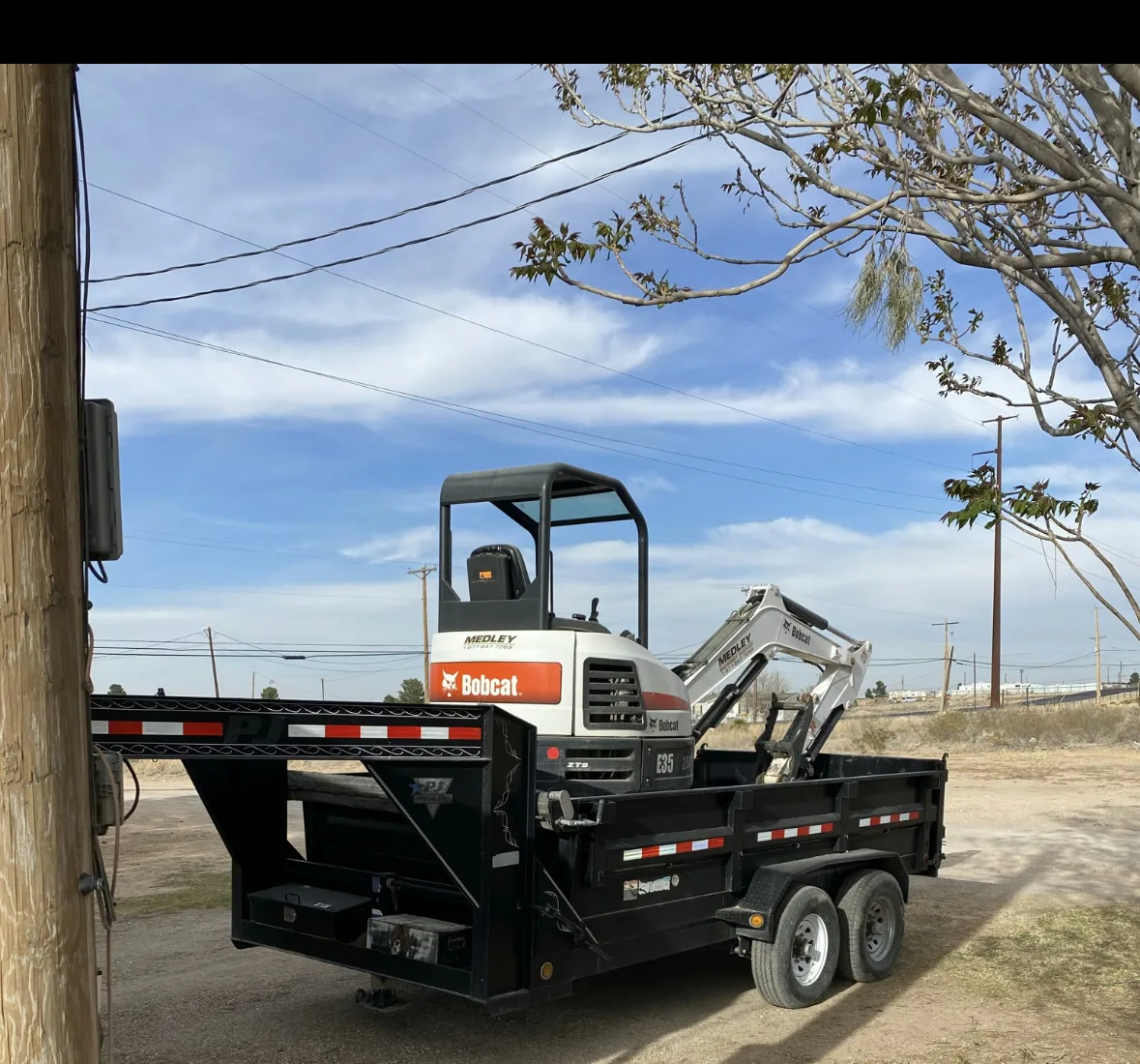
Depth is the one spec a trench lives or dies by, and it is set by code, not preference. The rest of this page sorts the rules out: what they say, what they mean around Duncan, and what the digging costs, from the trenching side of our operation.
What do the codes actually say?
Oklahoma writes its statewide construction rules through the Uniform Building Code Commission, which currently enforces the 2018 international codes, with the adopted 2024 editions taking effect September 14, 2026. The depth rules stack up like this:
| Line | Required depth | Where the rule lives |
|---|---|---|
| Water service to a house | 12 in. below grade minimum, and 6 in. below frost line | IRC P2603.5.1 / IPC 305.4 |
| Public water mains | 30 in. of cover | Oklahoma DEQ, OAC 252:626 |
| Building sewer | 12 in. below grade minimum, sloped to fall | Oklahoma amendments to IPC 305.4.1 |
| Direct burial electrical cable | 24 in. of cover | NEC Table 300.5 |
| Electrical in PVC conduit | 18 in. of cover | NEC Table 300.5 |
| Electrical in rigid metal conduit | 6 in. of cover | NEC Table 300.5 |
Two details trip people up. Electrical “cover” is measured from the top of the cable or conduit to finished grade, so the trench itself goes deeper than the table number. And sewer lines are gravity lines pitched about a quarter inch per foot, so a long run that starts at 12 inches ends up well below it.
Where is the frost line in Oklahoma?
Here is the part almost nobody explains: Oklahoma has no statewide frost line. The state’s adopted residential code deliberately leaves that cell blank and tells each jurisdiction to fill in its own number. The one Oklahoma city figure we could verify from a primary document is Stillwater, which publishes 18 inches. The 18 inch figures you see quoted for other cities trace back to SEO pages, not code documents, so confirm your own jurisdiction’s number before anyone builds to it.
What the climate data adds is comfort: the Oklahoma Climatological Survey’s atlas shows southern Oklahoma gets the shallowest frost in the state, with average maximum penetration in the single digits of inches and even extreme years falling far short of the panhandle’s roughly 30 inches. Duncan sits on the mild end of the map.
So the local answer stacks three numbers. The code floor is 12 inches. The code formula with a typical 18 inch frost line is 24. The state’s own standard for mains, the pipes it most wants protected from freezing, is 30. Build a private line somewhere in the 24 to 36 inch band, confirm the exact spec with your plumber and your water district, and January stops being interesting.
What does trenching cost?
HomeGuide’s 2026 data puts typical trenching at $5 to $12 per linear foot, which works out to roughly $500 to $1,200 per 100 feet. Homewyse’s 2026 national average for a basic 8 inch wide trench to 2 feet runs $11.55 to $27.48 per foot. Long rural runs, the meter-to-the-barn kind we dig most, usually price better per foot than short tight-access jobs because the machine stays productive.
What moves the number is what the bucket hits: rock, roots, compacted caliche, crossings under a drive, and depth itself. Baked August clay digs slower than October clay. None of it is guesswork once we have seen the route. The look and the quote cost nothing.
One trench often carries the whole project. A new building pad needs water and power before the slab closes the route off, and we covered that sequencing in our building pad cost guide. The usual arrangement on any of it: we dig to your plumber’s or electrician’s spec, they lay and connect the line, we bed it and close the trench in lifts so it does not become a sunken stripe across your yard.
What has to happen before anyone digs?
Oklahoma law requires a locate request through OKIE811 before excavation, and it applies to anyone digging, landowners included. The statute requires at least 48 hours of notice excluding weekends and holidays, OKIE811’s current guidance says give it three business days, and the ticket stays good for 14 calendar days. The service is free, and the fines and repair bills for skipping it are not.
One gap to know about: locates mark public utilities. The water line a previous owner ran to the barn in 1998, the yard light circuit, the line out to the stock tank, none of that shows up on a locate. We plan routes around what gets flagged plus what you know is out there, and then the dig stays boring, which is the goal.
Common questions about water line depth
What is the minimum burial depth for a water line?
Under the plumbing codes Oklahoma enforces, a water service line must sit at least 12 inches below grade and at least 6 inches below the local frost line, whichever puts it deeper. Public water mains have a separate state rule: at least 30 inches of cover under Oklahoma DEQ regulations.
How deep should a water line be so it does not freeze in Oklahoma?
Code logic says 6 inches below your local frost line. Stillwater publishes an 18 inch frost line, which puts that math at 24 inches, and DEQ requires 30 inches on public mains specifically to stop freezing. Around Duncan, 24 to 30 inches is the practical freeze-safe target most jobs get built to.
Is 18 inches deep enough for a water line?
It clears the 12 inch code floor, but 18 inches only reaches the frost line many Oklahoma jurisdictions use. The code wants the pipe 6 inches below that line, which lands around 24 inches. For a line you never want to think about in January, 24 to 30 inches is the safer spec.
How deep do electrical lines have to be buried?
The National Electrical Code’s Table 300.5 sets cover by wiring method: 24 inches for direct burial cable, 18 inches for PVC conduit, and 6 inches for rigid metal conduit. Cover is measured to the top of the conduit, not the trench bottom. Your electrician calls the spec; we dig to it.
Do I have to call 811 before digging on my own land?
Yes. Oklahoma’s damage prevention law applies to anyone digging, including landowners on their own ground. File the free OKIE811 locate request at least two business days ahead, and OKIE811 currently recommends three. Tickets stay valid for 14 calendar days. Private lines you added yourself do not get marked, so flag those.
How much does trenching cost per foot?
HomeGuide’s 2026 data puts typical trenching at $5–$12 per linear foot, around $500–$1,200 per 100 feet, and Homewyse’s 2026 national average for a basic 2 foot trench runs $11.55–$27.48 per foot. Depth, rock, roots and access move the number, so routes get quoted after someone has seen them.
Planning a run?
Water to the barn, power to the shop, a drain line away from a wet spot: if there is a trench in your project’s future around Duncan, Marlow, Comanche or anywhere in Stephens County, get in touch. We will look at the route with you, hear the spec your plumber or electrician wants, and quote the dig for free.