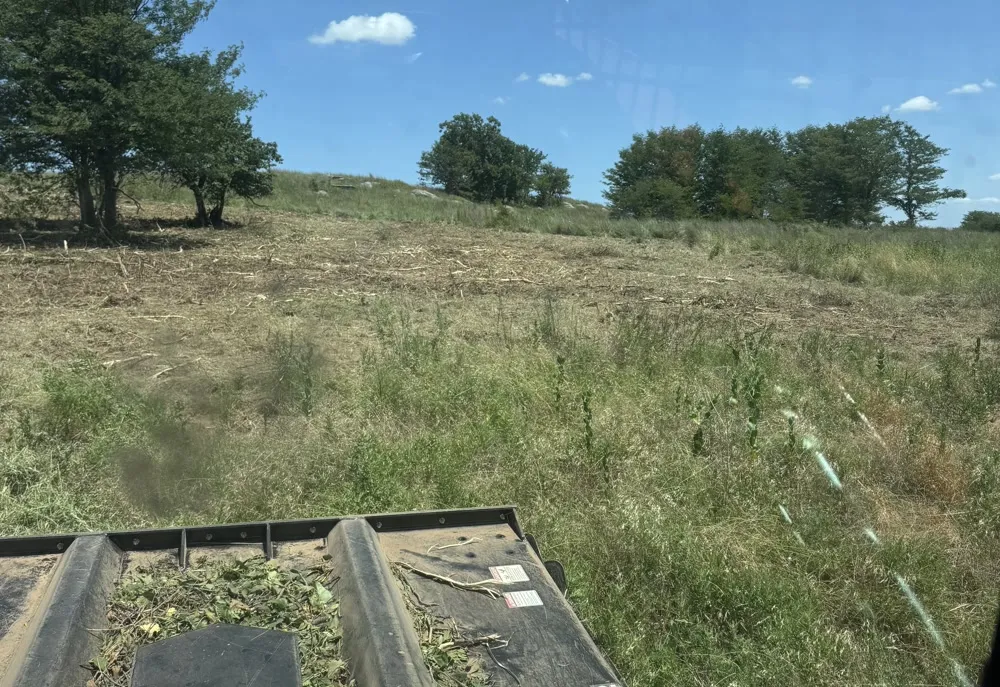
Land Clearing
Overgrown pasture, cedar breaks and brushy acreage cleared back to usable ground — cut, piled, and hauled off if you want it gone.
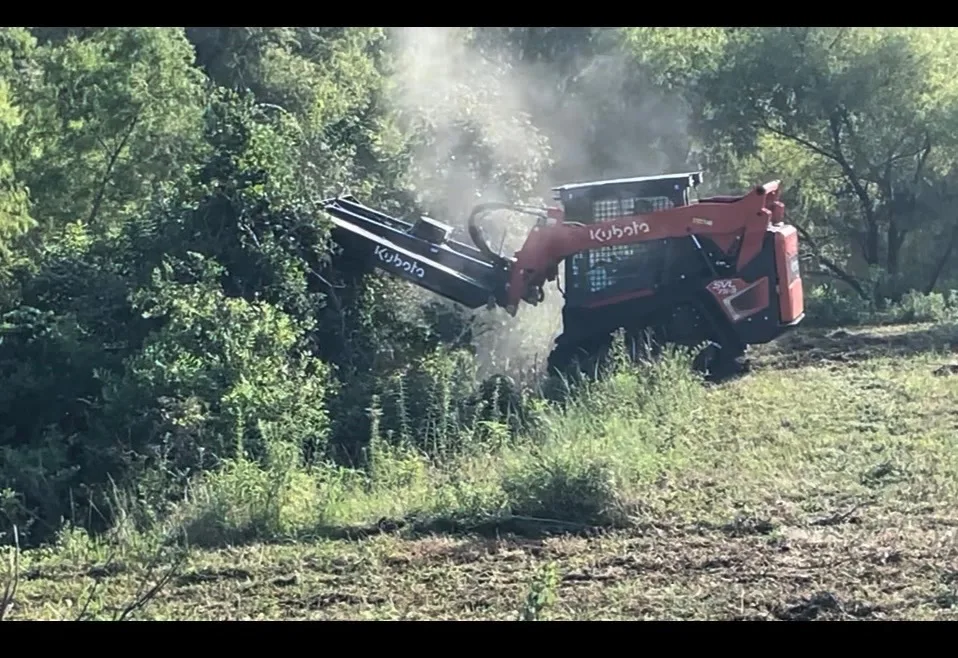
Brush hogging around Duncan, Marlow, Comanche and across Stephens County is a race you win by showing up every year — and lose by skipping two. Oklahoma grass, ragweed, briar and saplings will turn a mowed pasture into a thicket in a couple of growing seasons, and by then it's past what a lawn tractor or a light bush hog wants any part of. That's the work we're built for: a track skid steer running a hydraulic brush cutter that eats the heavy stuff — waist-high weeds, briar tangles, brush and saplings up to what the cutter's rated to take.
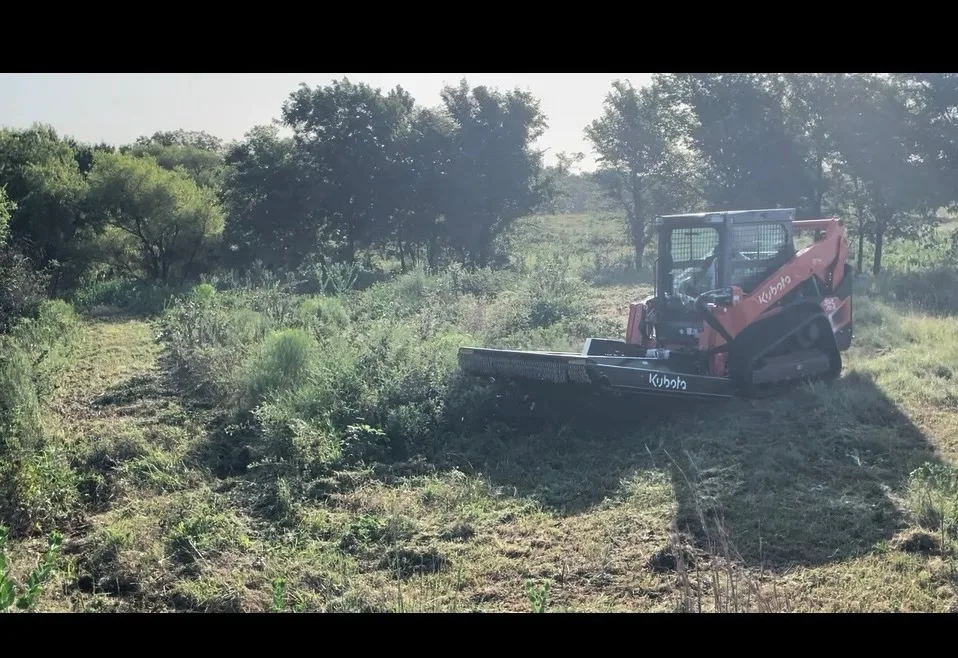
The skid steer matters as much as the cutter. It reaches the places a tractor gets nervous — creek banks, ditches, tight corners, ground you'd rather not wheel across — and cuts right up to the edge instead of leaving a fringe. Pastures, hay-meadow edges, overgrown lots in town, hunting lanes and food-plot edges, pond dams: if it's grown up past comfortable, we'll knock it back. Pair it with fence line clearing and the whole place looks kept again.
Tell us about your project — we’ll get right back to you.
There's mowing, and there's brush hogging. Grass and weeds are the easy half — the cutter's real work is the stuff that's stopped being mowable: briar and blackberry tangles, sumac and plum thicket, cedar seedlings, saplings thick as your wrist. The hydraulic cutter shreds it low and even, so what's left isn't a field of ragged stobs but ground that can be mowed like a pasture again next season.
Tracks are the other advantage. A tracked machine floats over soft spots and rough ground where a wheeled tractor ruts or slides, and a skid steer turns in its own length — so ditches, banks, corners and creek-bottom edges get cut instead of skipped. The result reads from the road: edges cut clean, no missed fringe, no torn-up ground.
Every year a field goes uncut, the job gets more expensive — weeds turn to brush, brush turns to saplings, and saplings turn into a clearing job instead of a mowing job. Cut on a schedule, the same field stays a quick, cheap pass. That's the honest math of brush hogging in this climate: pay a little regularly or a lot eventually.
Regular cutting is also what keeps land productive. Pasture holds its grass instead of surrendering to ragweed and cedar. Hunting ground keeps its lanes and edges — the places deer and quail actually work. And an overgrown lot stops collecting complaints, snakes and dumped trash. One-time rescue cuts are welcome work; a yearly standing cut is smarter money.
The jobs range wider than people expect. In town it's overgrown lots — the property that got ahead of somebody, the acreage behind a shop, the lot a city letter says has to be cut. Out of town it's pasture upkeep, hay-meadow edges, CRP-style ground that needs knocking down, pond dams (and the silted-in ponds behind them), and lanes through hunting land before season. Same machine, same clean cut.
Every job starts with the same free look. We walk it, check what's hiding in the grass — old fence wire, stumps, a forgotten implement — and quote the actual cut, not a guess. If what you really need is more than mowing, we'll say so and price the right fix: clearing for the thicket, dirt work for the washout. Call and we'll come look.
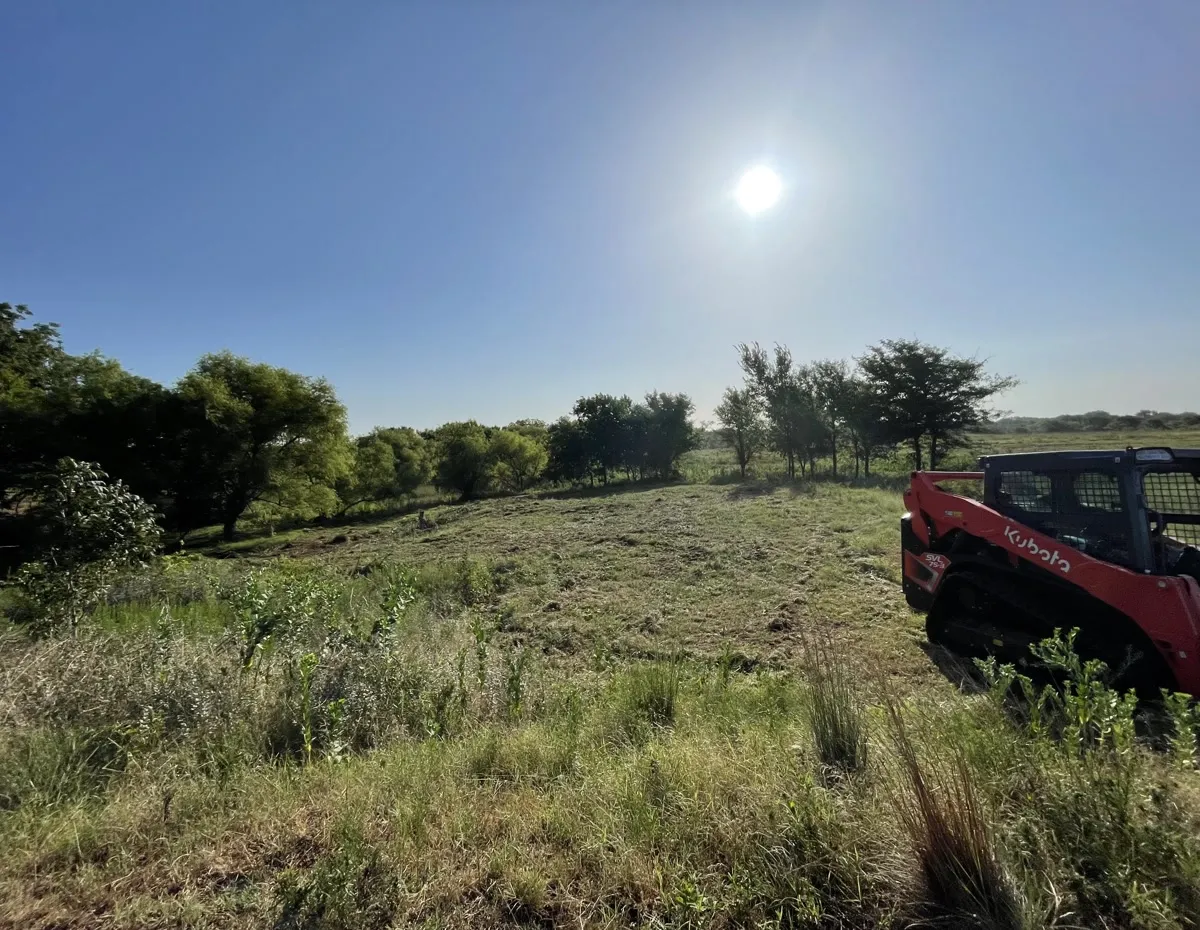
Free, no-obligation estimates across Duncan & Southwest Oklahoma.
(580) 475-7413From the first walk of the property to the last pass of the grade, here is exactly how it goes.
We come look at the actual land — the brush, the trees, the ground under it, and how equipment gets in. No blind quotes over the phone; land work prices off what's really out there.
You get a free, no-obligation quote with a real number and a real plan — what gets cleared, where the dirt goes, what happens to the brush. It holds unless the scope changes.
The equipment shows up when we said and the job runs the way we quoted it — clearing, mowing, grading, digging. Hit something unexpected, you hear about it immediately, not on the bill.
When the work's done we walk the property together. Brush handled the way we agreed, grades draining the right way, gates and fences the way we found them. Done means you say it's done.
Common questions about brush hogging across Duncan & Southwest Oklahoma. Don't see yours? Give us a call — we're happy to help.
Overgrown pasture, cedar breaks and brushy acreage cleared back to usable ground — cut, piled, and hauled off if you want it gone.
Overgrown fence rows cut back clean on one side or both — so you can find the wire, fix the fence, and keep cattle where they belong.
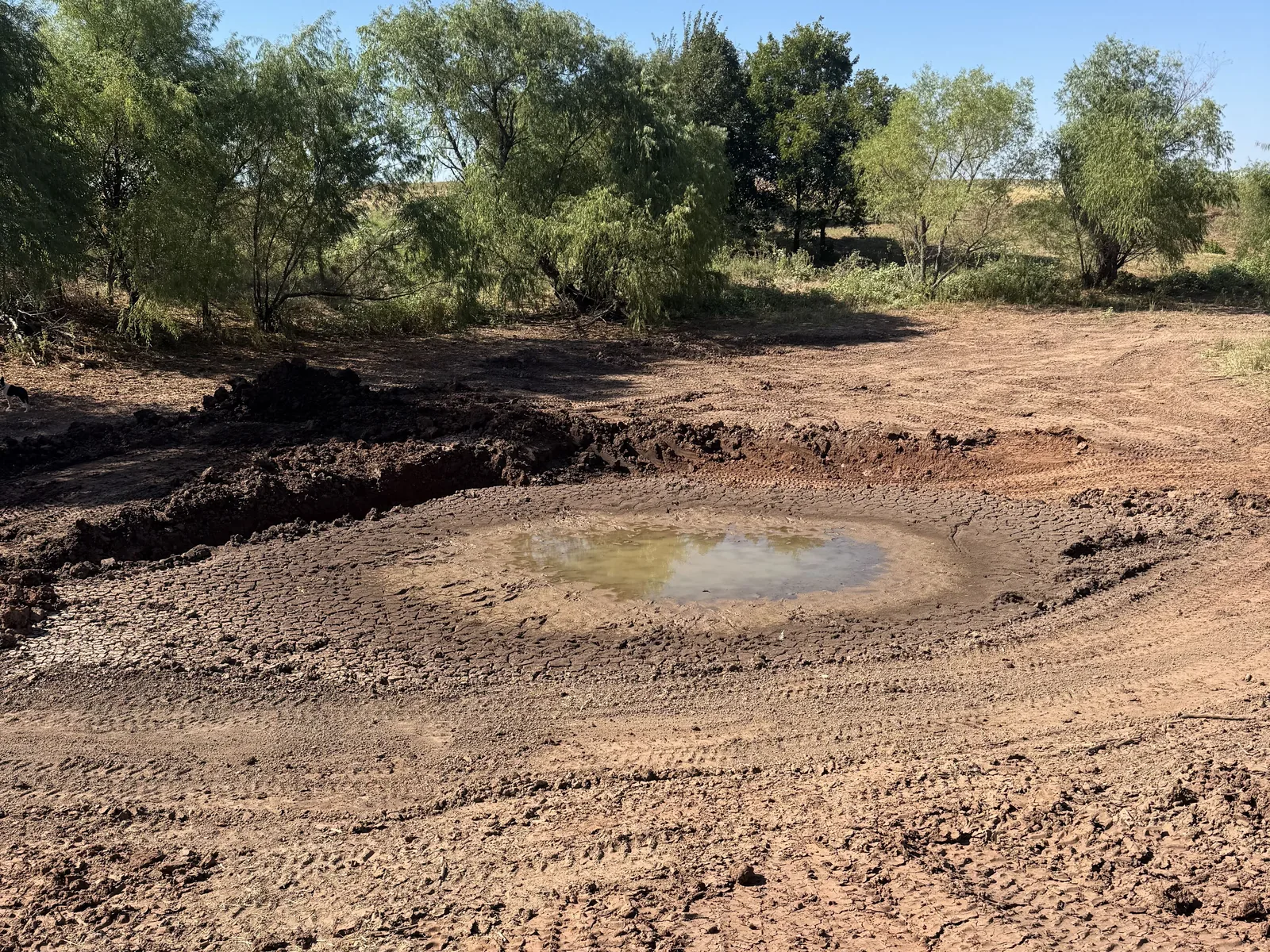
We build small stock ponds, dig out ponds that have silted in and repair small dams and spillways around Duncan and Stephens County.
It is on the trailer because we mean it. Ground shaped so water leaves, brush cut so it stays cut, roots dug instead of mowed over — done once, done right.
Track skid steers with a hydraulic brush cutter, a mini excavator, a tractor and a gooseneck dump trailer — sized for real land work without wrecking the ground doing it.
We walk the actual property, tell you what it needs and what it does not, and put a real number on it. Free, no obligation, and it holds unless the scope changes.
Based in Duncan and on Stephens County ground every week. Cedar, mesquite and red clay are the daily work here, and every quote comes from looking at your land in person.
Real reviews from real land clearing, dirt work and driveway jobs on Google.
Double AA Land Services… highly recommended! They are dependable, hardworking, and take pride in doing the job right. Great communication, fair pricing, and they show up when they say they will.
Had them bring rock and spread for two of our rental property driveways, exceptional work at an affordable price. Will be using them again in the future
We had a great experience with Double AA Land Service! They were professional, reliable, and did an excellent job. The work was done efficiently, and they really cared about making sure everything was done right.
Bush hogging runs $60 to $250 per acre in published 2026 contractor guides, less on big open ground. What moves the rate, hourly math, and when mowing stops being enough.
Read more →Eastern red cedar takes over 300,000 Oklahoma acres a year. What removal costs by tree size, the water and grazing math, cost-share programs, and what kills cedar.
Read more →Fence line clearing costs about $3 to $12 per foot in published 2026 guides. Project-size examples, what drives the price, and why clearing beats replacing wire.
Read more →What land clearing costs per acre in Oklahoma in 2026: published market ranges by brush density, what moves the number, and the rules on burning the piles.
Read more →The honest difference between brush hogging and land clearing, what each one costs relative to the other, and how to tell which your overgrown Oklahoma ground needs.
Read more →Overgrown pasture, a fence line you can't find, ground that holds water, a pad or driveway that needs building? Call or send the form and we'll walk the property with you and hand you a free, straight quote — no pressure, no games.
Tell us about your project — we’ll get right back to you.